
Introduction
At Regen Microscopy, we specialize in refurbishing and extending the life of electron microscopes.
And if there’s one “invisible killer” we’ve encountered again and again — it’s improperly managed coolant.
This article breaks down the problem with distilled water, the risks it poses to your microscope, and the protocol we use in-house to protect high-value systems.
Tips: Even when switched off, a microscope with untreated water keeps corroding from the inside.
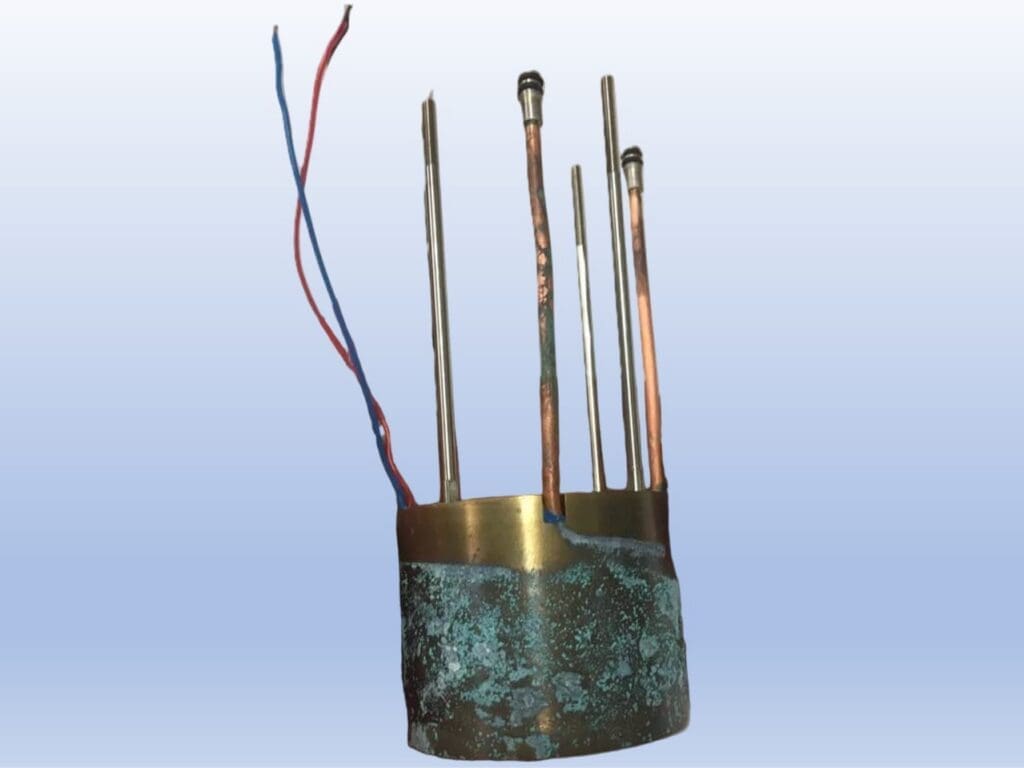
Why Distilled Water Is a Hidden Danger
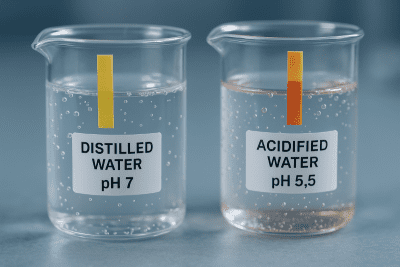
Distilled or deionized water is often seen as a “safe” choice for cooling. However, once exposed to air, it absorbs CO2 and forms carbonic acid — lowering the pH to ~5.5.
This acidic water becomes chemically aggressive, capable of corroding:
- Copper pipes and fittings
- Brass seals and flow meters
- Lens casings and internal mounts
- Adhesives and O-rings inside the vacuum system
Over time, we’ve seen:
- Internal leaks
- Rusted or cracked lenses
- Cooling failures
- Short-circuits and electrical damage
Tips: Looks pure, but once exposed to air, it turns acidic and eats away your system.
Regen Microscopy’s Recommended Coolant Protocol
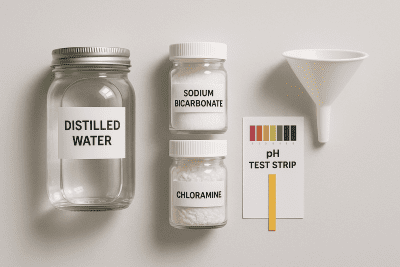
We’ve developed a reliable coolant recipe to prevent this kind of damage in every SEM, TEM or FIB system we refurbish:
Regen Coolant Formula (per liter of distilled water):
- 1.4 g Sodium Bicarbonate (NaHCO₃) → pH buffer
- 0.25 g Chloramine → biocide against algae and bacteria
- Always add the buffer first, then the biocide.
Best practices:
- Use opaque hoses and tanks
- Pool or automotive pH strips are accurate enough
- Target pH 7.5 – 9.0
- Check pH at least every 6 months
Tips: Always mix in a separate container and label the tank with the prep date.
When Should You Replace the Coolant?
If color changes, deposits appear, or smell is off → replace immediately
If pH is <7.0 or >10.0 → replace immediately
Otherwise, change every 12–18 months for closed-loop systems
Tips: A simple logbook with pH and dates can save a microscope worth hundreds of thousands.
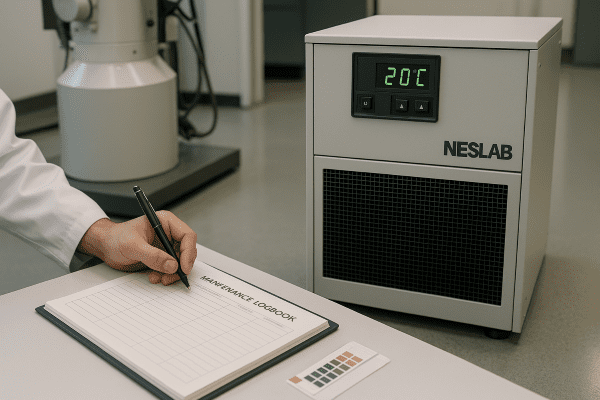
Maintenance Is Part of the Machine
At Regen, every microscope we refurbish gets a full fluid system check:
- Flush old fluid
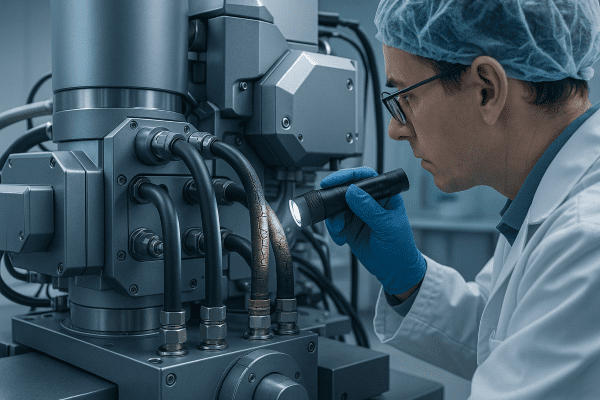
- Inspect hoses and connectors
- Fill with our in-house coolant blend
- Label and document fluid composition + pH
Tips: Take a quick photo after each check — the easiest way to spot changes over time.
Quick Summary
- Use distilled water only with buffer & biocide
- Add 1.4g sodium bicarbonate + 0.25g chloramine per liter
- Use opaque hoses and check pH every 6 months
- Maintain pH between 7.5 and 9.0
- Replace fluid every 12–18 months or sooner if signs of degradation
Tips: Print the checklist as a poster near the water chiller.


